
No break for commuters: Bengaluru Metro fares set to rise again by up to 5% from February 9
Bengaluru:
Even as operating costs rise faster than fares, Bengaluru Metro commuters will face another round of fare increases from February 9, 2026, with ticket prices going up by ₹1 to ₹5 across all distance slabs under a newly introduced automatic annual fare revision mechanism.
Delivering a shocker, the Bangalore Metro Rail Corporation Limited (BMRCL) said the hike is capped at 5%, despite audited financial data showing a 10.20% increase in costs for 2024–25.
While the corporation has described the revision as “small and gradual”, commuter groups point out that this comes barely a year after a steep fare restructuring in February 2025, which followed a gap of over seven years without revision.
Automatic hikes, limited public scrutiny
The new system, recommended by the First Fare Fixation Committee (FFC), makes annual fare increases mandatory, linked to operating and maintenance costs or 5%, whichever is lower.
The mechanism, which BMRCL says is binding, significantly reduces the scope for public consultation or political intervention in future fare revisions.
Critics argue that while the formula may smoothen long-term increases, it also normalises yearly fare hikes, placing a recurring burden on daily commuters already grappling with high fuel prices, parking fees and rising living costs.
What commuters will pay
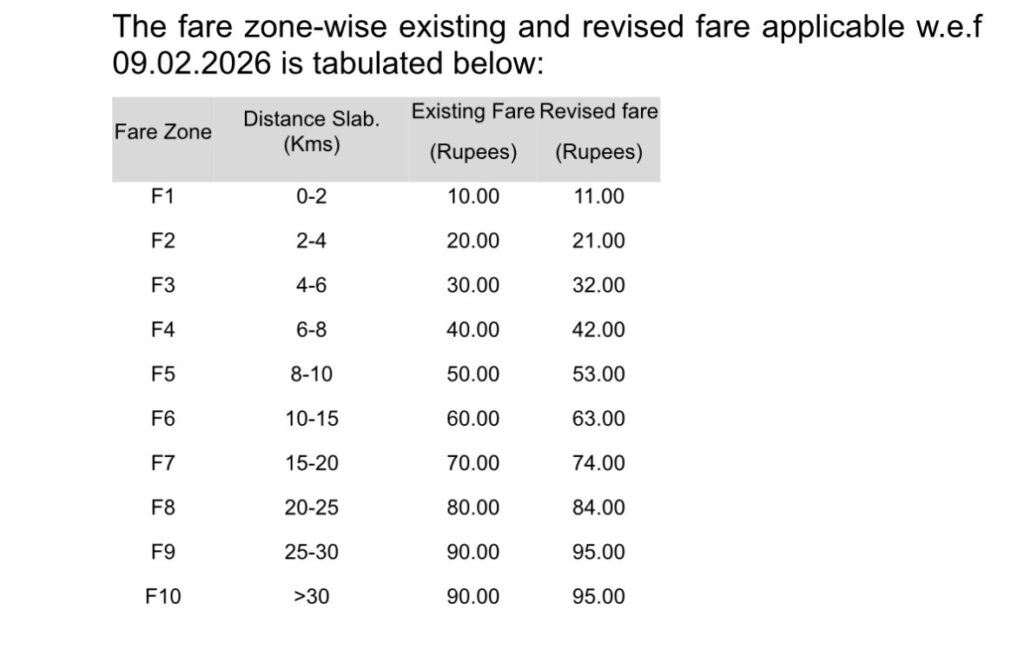
Under the revised fare table effective February 9, 2026:
The minimum fare for short-distance travel (up to 2 km) will rise from ₹10 to ₹11 The maximum fare for journeys beyond 30 km will increase from ₹90 to ₹95 All intermediate slabs across the Metro’s 96.10-km network have been revised proportionately
Although the absolute increase appears modest, regular commuters note that successive annual hikes could quickly add up, especially for those travelling long distances daily.
Discounts stay, but base fares climb
BMRCL has retained existing discounts for smart card and NCMC users — 5% during peak hours, 10% during non-peak hours, and 10% on Sundays and select national holidays. However, transport experts point out that discounts offer limited relief when base fares themselves continue to rise annually.
The same 5% increase has also been extended to tourist cards and group tickets, with a one-day pass now costing up to ₹313 for smart card users.
BMRCL has defended the move, stating that annual revisions are necessary to ensure financial sustainability and service reliability, and to avoid sharp, one-time fare shocks in the future.
Officials argue that infrequent revisions in the past led to the average 51.55% fare increase seen after 7.5 years.
However, urban mobility advocates stress that fare sustainability must be weighed against ridership growth and affordability, warning that repeated hikes risk pushing commuters back to private vehicles — undermining Bengaluru’s already fragile traffic and air quality goals.
With Metro services expanding across the city, the latest revision raises a familiar question: how much more can daily commuters afford to pay for public transport before reliability gives way to resistance?