
Namma Metro’s Phase-3 funding sealed as JICA signs Rs 6,100 cr loan agreement
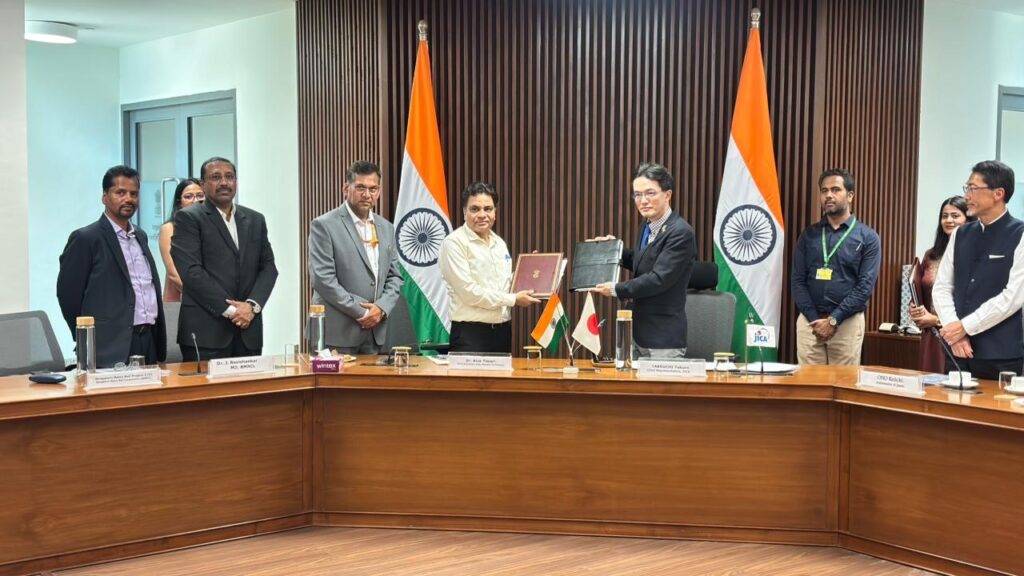
New Delhi/Bengaluru: In a major boost to the expansion of metro rail in Bengaluru, a key loan agreement for Phase-3 of the Bangalore Metro Rail Corporation Limited was signed on March 24, 2026, paving the way for financial closure of the project.
The agreement was inked between Japan International Cooperation Agency and the Government of India in New Delhi.
Mr. Takeuchi Takuro, Chief Representative of JICA India, signed on behalf of the Japanese agency, while Mr. Alok Tiwari, Joint Secretary, Department of Economic Affairs, represented the Centre.
The signing took place in the presence of BMRCL Managing Director J. Ravishankar and Director (Finance) S. Sivamathan.
The Government of India has approved a total senior debt of ₹6,775 crore for Phase-3. Of this, JICA has committed to provide ₹6,100 crore (equivalent to 102,480 million Japanese Yen) as the first tranche, with the remaining amount to follow as a second tranche.
Officials said this agreement is critical as it effectively ensures financial closure for the Phase-3 project, enabling faster execution of works.
The loan comes with a long repayment tenure of 30 years, reflecting the continued role of JICA as a key funding partner in Bengaluru’s metro expansion.
Project scope and corridors
Phase-3 of the metro project spans 44.65 km and includes two major corridors:
Corridor-1: JP Nagar 4th Phase to Kempapura (along Outer Ring Road West) – 32.15 km Corridor-2: Hosahalli to Kadabagere (along Magadi Road) – 12.5 km
The project was approved by the Government of India in September 2024 at a total cost of ₹15,611 crore.
Components under JICA funding
JICA’s financing will cover a wide range of project components, including:
– Civil construction packages
– Permanent way works
– Rolling stock procurement
– Signalling and telecommunication systems
– Automatic fare collection (AFC) Traction systems
– Consultancy services
With Phase-3 focusing on the Outer Ring Road West and Magadi Road corridors, the project is expected to significantly improve connectivity in key growth zones of Bengaluru, ease congestion, and support urban expansion.