
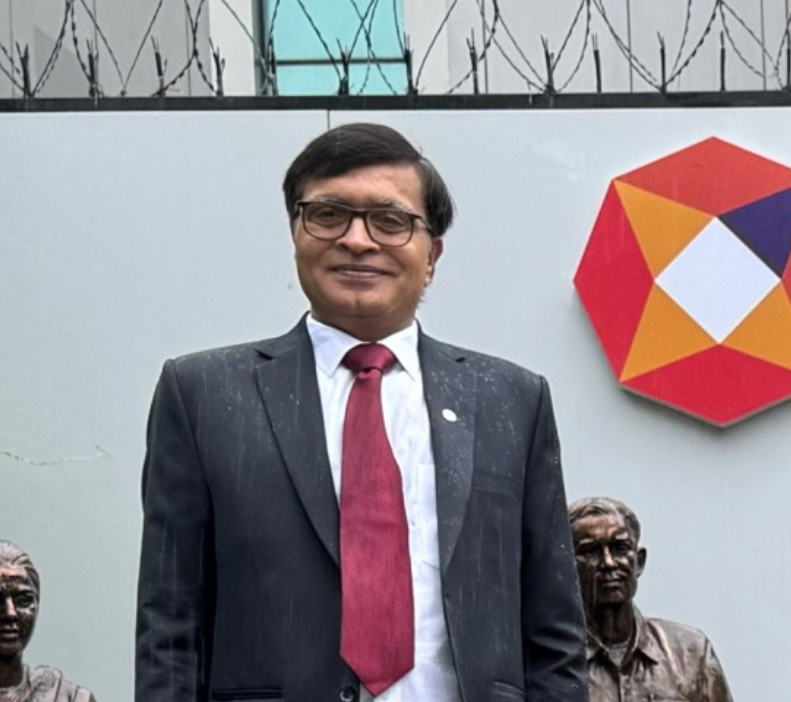
Ashwin Sancheti
How a complaint on alleged fake heirs, forged papers led to Sattva VP’s arrest
Bengaluru
Bengaluru’s Bandapura village has emerged as the center of a high-profile alleged land fraud involving Sattva Resi Private Limited, its Vice President Ashwin Sancheti, and multiple other parties accused of attempting to seize over ten acres of ancestral property.
Last month, Sancheti and 13 others were booked under several provisions of the Bharatiya Nyaya Sanhita (BNS), 2023, for allegedly forging documents to claim ownership of land in Survey Nos. 20, 21 and 44/1. Sancheti is currently out on bail.
While Sattva maintains that it followed all legal procedures and denies any wrongdoing, investigations and complaints filed by the rightful landowner reveal a complex web of alleged document forgery, fabricated heirs, and repeated registrations designed to manipulate ownership of Survey Nos. 20, 21, and 44/1.
The disputed land originally belonged to three brothers—D R Govind Rao, D R Mahadev Rao, and D R Jagannath Rao—who sold it in 1974 to a man named Muddappa under the 1954 Inam Abolition Act. In 1978, Radha’s late husband, S. Krishnan, purchased the same plots from Muddappa, with the transaction properly registered at the Hosakote sub-registrar office. Following Krishnan’s death in 1986, Radha, who had no children, became the sole legal owner of the property.

According to the complaint filed by Venkappa K, who holds power of attorney for Radha, the alleged fraud began when a group of individuals falsely claiming to be Radha’s children—Ashwin Sanchith, Lok Sundar, K Dhruvakumar, Meenakshi, and Lavanya—attempted to establish ownership. By presenting themselves as legal heirs, they created a veneer of legitimacy that allowed them to interfere with property records, file civil suits, and execute transactions in her name.
Investigators allege that the accused prepared forged sale deeds backdated to 1978, typed on stamp paper, with altered purchase dates and forged signatures of sellers, buyers, witnesses, and even the stamp vendor. These documents were registered with sub-registrar offices, giving the appearance of authenticity. By embedding these forgeries in official channels, the accused sought to create a legal shield against any challenge from Radha.
A crucial tool in the alleged fraud was the creation of falsified general power of attorney documents. These GPAs purported to authorise the accused to act on behalf of Radha and her supposed heirs, enabling them to negotiate joint development agreements, execute sale deeds, and interact with developers, banks, and authorities as if they were legitimate stakeholders.
This strategy allowed the accused to operate within the legal framework on paper while bypassing the actual property owner. The GPAs, combined with forged sale deeds, gave the accused the leverage to create a chain of ownership and transactions that appeared legitimate in official records.
The costly deal
The dispute became particularly high-profile when the accused entered into a Joint Development Agreement (JDA) with Sattva Resi Private Limited on August 14, 2023.
The agreement, covering more than twelve acres and 30.5 guntas, listed Radha and her purported children as signatories. According to the complaint, the accused received payments totaling ₹18 crore—₹15 crore as deposits and ₹3 crore through cheques—while Radha, the legal owner, remained unaware.
Sattva has issued a statement asserting that the company complied with all legal requirements and was not involved in document fabrication or impersonation. The company emphasized that its involvement was limited to the JDA and that it would cooperate fully with authorities, presenting the facts of the case.
Multiple registrations and judicial filings
What can be noted is that the alleged fraud extended into multiple sub-registrar offices, including Shivajinagar, Banaswadi, Indiranagar, Varthur, and Sargapur, where fake sale deeds, declaration deeds, and other documents were repeatedly registered. Civil suits (O.S. Nos. 1137/2024 and 2146/2023) were filed by the accused using forged documents to strengthen their claims. This multi-layered strategy created overlapping paper trails, making it difficult to trace the true ownership history and allowing the accused to consolidate their claim on the property.
Adding another dimension to the alleged fraud, portions of Radha’s land had been acquired by the National Highways Authority, entitling her to compensation of over ₹11 lakh. The complaint alleges that forged documents were submitted to divert these funds to the accused. In an extreme example of manipulation, a will was allegedly registered in 2023, posthumously attributing actions to Radha, who had died in 2022.
Sattva has however denied any involvement in impersonation, fabrication of documents or related illegal activities.
Read more:
https://blrpost.com/bengaluru-police-arrest-sattva-group-vp-in-multi-crore-land-scam/
https://blrpost.com/sattva-group-denies-role-in-alleged-bandapura-land-fraud-after-vps-arrest/