
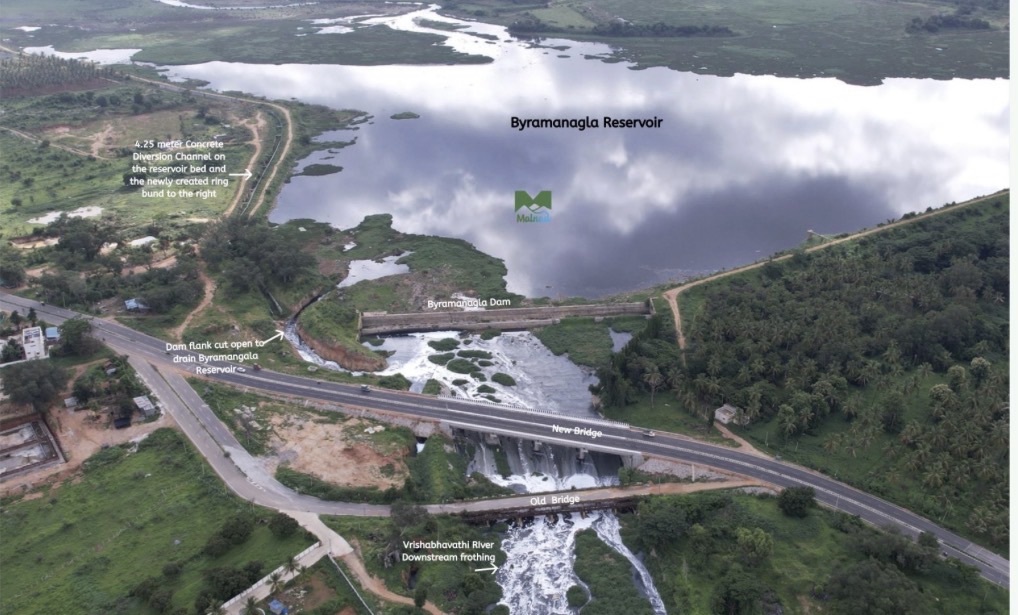
Study questions ₹391-crore reboot of Byramangala Lake amid Vrishabhavathi pollution
Bengaluru:
A ₹391-crore government plan to “reboot” Byramangala Lake has come under criticism, with a new study warning that the project may have limited impact unless the severe pollution in the Vrishabhavathi River — which feeds the reservoir — is addressed first.
The report, State of the Vrishabhavathi River (2016–2025): River Condition, Public Health, and the ₹391-crore Reboot, released by research platform Mapping Malnad, argues that restoration efforts focused on the reservoir could prove ineffective if untreated sewage and industrial effluents continue to flow downstream through the river.
The reboot proposes an additional sewage treatment plant, large-scale desilting of the Byramangala Reservoir, river diversion works, and reservoir embankment — none of which address the source of the problem.
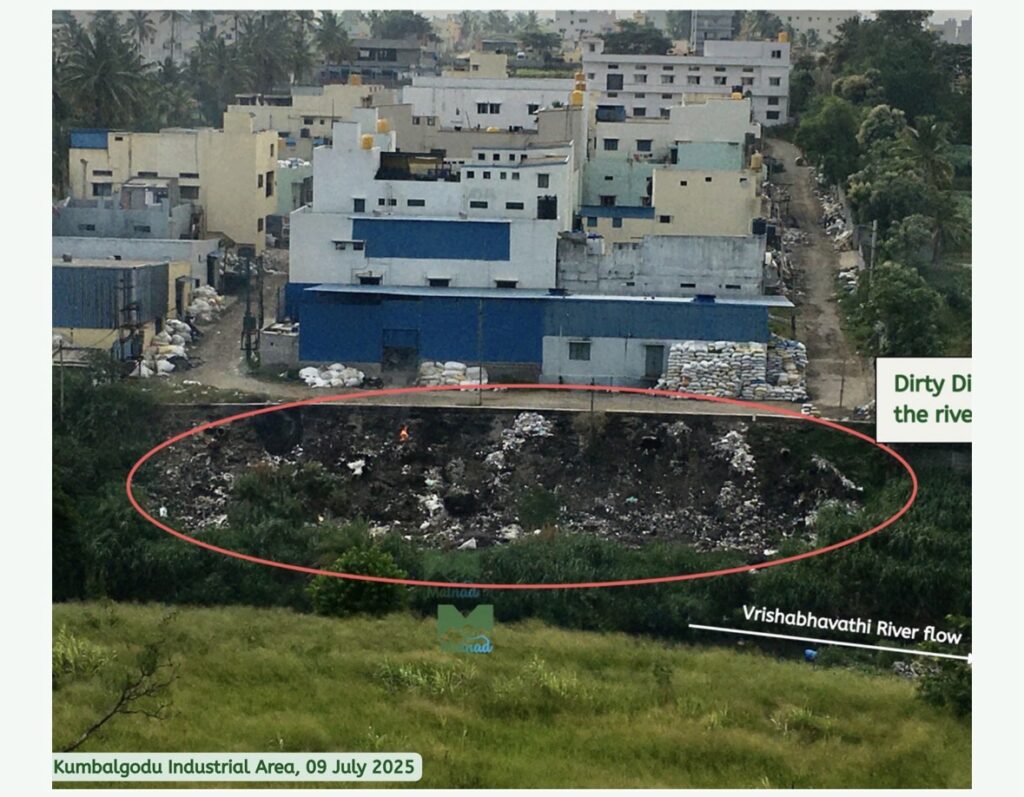
With the proposed development of the Bidadi Satellite Township, there is clear administrative momentum to cosmetically clean the area. “As with the earlier project, pollution would again be diverted downstream rather than stopped at source,” the study states.
“The Byramangala reservoir will be filled with treated wastewater from the STP and positioned as a recreational amenity for the township, while the river—and the toxic waste it carries—will be confined to a channel lined with revetment walls, hidden.”
Even as the river’s condition continues to worsen, vegetables grown on its waters remain poisoned, and recommendations from State and Central pollution control boards — along with court directions — remain unimplemented, the researchers point out.
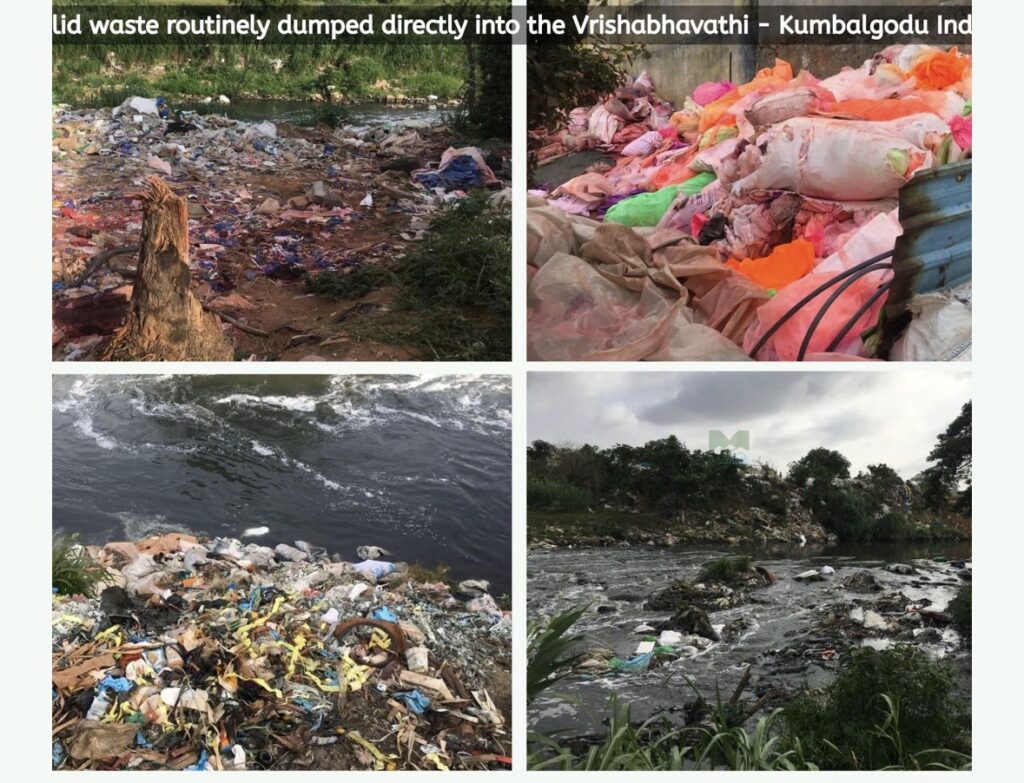
According to the study, which is steered by noted environmentalist Nirmala Gowda, the Vrishabhavathi has effectively turned into an urban wastewater channel carrying hundreds of millions of litres of sewage and industrial discharge from Bengaluru before entering Byramangala Lake in Ramanagara district.
Based on field observations, government monitoring data and regulatory records from nearly a decade, the report notes that water quality indicators such as biochemical oxygen demand (BOD) regularly exceed permissible limits, pointing to severe organic pollution in the river.
Researchers also documented continuous discharge of untreated industrial effluents and sewage along several stretches of the river downstream of Bengaluru, particularly near industrial clusters.

The study warns that pollution in the river and the reservoir could have serious ecological and public health implications, with contaminants potentially entering groundwater systems and agricultural produce in downstream areas.
It also notes that despite repeated inspections, regulatory directions and action plans over the years, several recommended measures — including stronger monitoring of industries and improved wastewater treatment — remain inadequately implemented.
Byramangala Lake, which receives the polluted waters of the Vrishabhavathi before the river joins the Arkavathi basin, has long been identified as a pollution hotspot.
The report calls for stricter enforcement against untreated discharge and upstream pollution control before investing heavily in lake restoration projects.
“When pollution is redirected downstream bypassing the reservoir—to Kanakapura and to the farmers in the Harobele dam command area—it becomes injustice. They are burdened with a problem they did not create, whose magnitude they may not fully grasp, and for which they have the least capacity to seek redress.”