
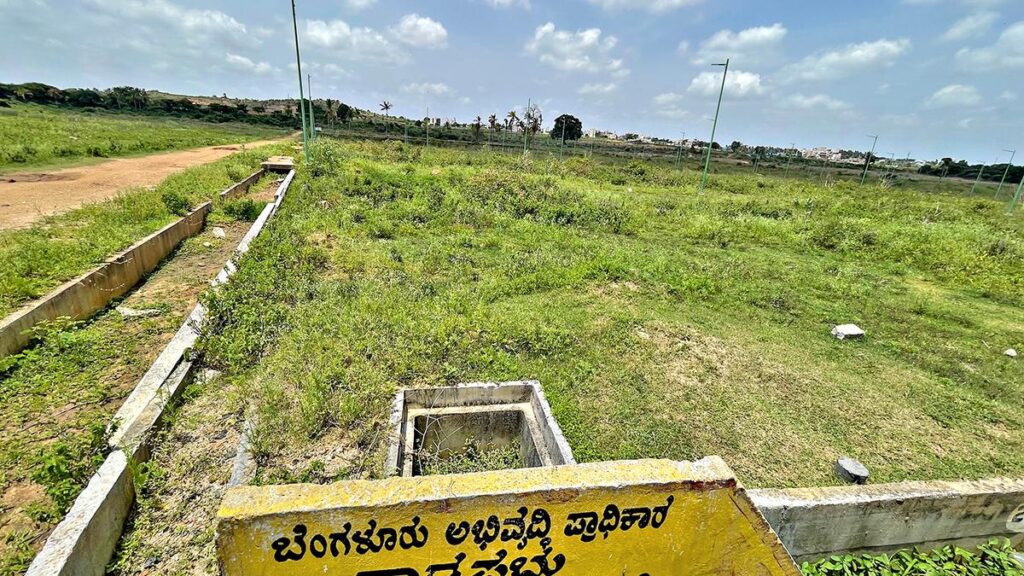
Representative Image. Credit: The Hindu
RERA Tribunal dismisses BDA appeal, upholds order to register Kempegowda Layout Project
Bengaluru
The Karnataka Real Estate Appellate Tribunal has dismissed an appeal filed by the Bengaluru Development Authority (BDA) and upheld an earlier order of the Karnataka Real Estate Regulatory Authority (RERA), ruling that the development body must register the Nadaprabhu Kempegowda Layout project under the provisions of the Real Estate (Regulation and Development) Act, 2016.
In its order on admissibility, the Tribunal held that the provisions of the RERA Act are “squarely applicable” to BDA when it develops land and sells plots or buildings to the public. Consequently, the appeal filed by the authority under Section 44 of the Act was dismissed at the admission stage, and the RERA Authority’s order dated November 7, 2025 was confirmed.
The case arose from complaints filed by multiple allottees regarding the Nadaprabhu Kempegowda Layout project. In its earlier decision, RERA had allowed the complaints and issued several directions to BDA. These included rejecting the authority’s preliminary objection that RERA lacked jurisdiction over it, declaring that BDA qualifies as a “promoter” when it develops land and sells plots, and directing it to register the project under the Act.
The Tribunal noted that the project was held to be an ongoing real estate project requiring registration under Section 3 of the RERA Act and the relevant Karnataka rules. RERA had directed BDA to register the project within two weeks from the date of its order.
Further, the authority had instructed BDA to submit detailed project documentation, including layout approvals, sanctioned plans, development status, financial disclosures, and details of internal and external development works. It was also required to provide information on amenities such as roads, sewage treatment plants, water treatment facilities, parks, open spaces, civic amenity sites and utilities, along with the current inventory of sold and unsold plots.
Until such registration was completed, RERA had barred BDA from marketing, advertising, booking or selling plots, villas, or amenity spaces in the project. The authority was also restrained from creating third-party interests in civic amenity sites, open spaces or roads within the layout.
Additionally, the regulator had asked BDA to explain within three weeks why penalty proceedings under Section 59(1) of the RERA Act should not be initiated for failing to register the project as required under the law.
The BDA challenged this order before the Tribunal, arguing that it is a statutory planning authority established under the Bangalore Development Authority Act, 1976 and therefore should not be treated as a promoter in the conventional sense. According to BDA, the RERA Act was primarily intended to regulate private developers and not public authorities functioning in the public interest.
The authority further contended that the Nadaprabhu Kempegowda Layout scheme had been conceived and land acquired well before the enactment of the RERA law. Therefore, it argued that the project should not fall within the ambit of the Act.
BDA also submitted that allotments made by it are governed by the BDA (Allotment of Site) Rules, 1984 and are contractual arrangements between the authority and allottees. Disputes arising from such allotments, it argued, should be resolved under those rules rather than through RERA proceedings.
Another argument advanced by BDA was that unlike private developers, it does not undertake commercial activity for profit but functions in the public interest to provide housing. The authority pointed out that its projects involve large-scale land acquisition processes and are often subject to litigation and delays, making them different from private real estate ventures.
However, the Tribunal rejected these arguments while examining the legal definition of “promoter” under the RERA Act. It observed that the definition is broad and explicitly includes development authorities and other public bodies that construct buildings or develop plots for sale.
Referring to the statutory provisions, the Tribunal stated that when an authority develops land into plots or constructs buildings on land owned by it or placed at its disposal by the government for sale to the public, it falls within the definition of a promoter.
The Tribunal also relied on judicial precedent, including a ruling of the Punjab and Haryana High Court in the case of Anil Kumar Yadav and Others vs State of Punjab and Others, which held that statutory development authorities engaged in selling plots or buildings must be treated as promoters under the RERA framework.
According to the Tribunal, the purpose of the RERA Act is to ensure accountability, transparency and consumer protection across the entire real estate sector, regardless of whether the developer is a private company or a government authority.
The order also noted that BDA, like private developers, enters into agreements with allottees—in its case typically lease-cum-sale agreements—which define timelines and obligations for handing over possession of plots or properties. Therefore, compliance with the regulatory framework governing such transactions is necessary.
While the Tribunal had earlier granted BDA temporary relief from depositing the amount awarded by RERA under Section 43(5) of the Act pending the outcome of the appeal, it clarified that such exemption was limited to the specific circumstances of the case and would not serve as a precedent.
With the dismissal of the appeal, the Tribunal confirmed that BDA must comply with the RERA Authority’s directives and proceed with registration of the project as required by law.
The Tribunal concluded that there was no fault in the order passed by the RERA Authority and that the complaints filed by the allottees were within its jurisdiction. Accordingly, the plea by BDA to dismiss the complaints for lack of jurisdiction was also rejected.
The ruling is expected to have wider implications for large government-led housing layouts and development schemes, reinforcing that statutory development authorities engaged in selling plots or apartments are subject to the same regulatory oversight as private real estate developers under the RERA regime.