
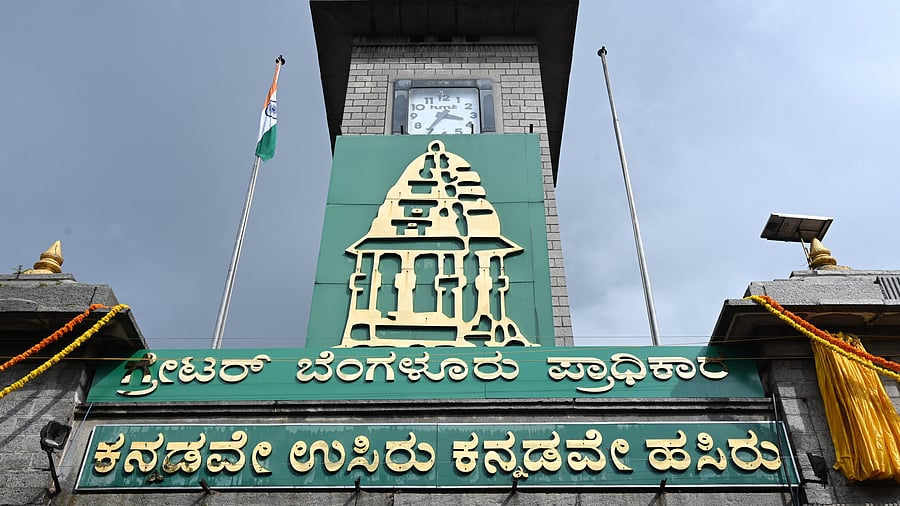
Representative Image. Credit: Deccan Herald
Bengaluru civic bodies to take over chronic tax defaulters’ properties as last resort
Bengaluru
In a decisive and far-reaching move to tackle mounting property tax arrears, the Greater Bengaluru Authority has unveiled a stringent last-resort mechanism that empowers city corporations to take over properties of chronic defaulters after exhausting all legally mandated recovery measures.
The announcement, made by Special Commissioner (Revenue) Munish Moudgil, marks a significant shift in enforcement strategy, reflecting growing concern within the administration over long-pending dues that have resisted conventional recovery efforts. Officials indicated that despite repeated issuance of demand notices, attachment proceedings, and attempts to auction such properties, a number of cases have remained unresolved, largely due to persistent non-payment by owners and a lack of participation from bidders in public auctions.
Under the newly articulated framework, the civic body will step in to purchase these defaulted properties itself at a pre-determined upset price, which is typically aligned with the government’s guidance value. This provision is intended to break the deadlock in cases where auctions repeatedly fail, effectively ensuring that recovery proceedings do not remain indefinitely stalled. Authorities emphasized that this step will only be invoked in exceptional circumstances, strictly after due process has been followed and all other avenues of recovery have been exhausted.
Once the corporation acquires a property through this mechanism, the sale proceeds will be used to offset the entire outstanding liability, including the principal tax amount, accumulated penalties, interest, and any administrative expenses incurred during the recovery process. In a bid to maintain procedural fairness and transparency, officials have clarified that any surplus amount remaining after the adjustment of dues will be refunded to the original property owner, or khatedar, through a direct bank transfer. This provision seeks to balance enforcement with equity, ensuring that property owners are not deprived of value beyond their outstanding liabilities.
Following acquisition, the property will vest with the city corporation free from all encumbrances, and the necessary changes will be made in official ownership records. This effectively transfers full control and title of the property to the civic authority, enabling it to deploy or dispose of the asset in accordance with municipal requirements.
Significantly, the administration has built in a final safeguard for defaulters, offering them a one-month window to settle all pending dues, along with applicable interest, even after the takeover process has been initiated. If the dues are cleared within this period, the acquisition order will be withdrawn and the property restored to the original owner. Officials described this as a last opportunity for compliance, underscoring the administration’s preference for voluntary payment over coercive action.
The move is part of a broader effort to strengthen fiscal discipline and augment municipal revenues at a time when urban local bodies face increasing financial pressures linked to infrastructure development and service delivery. By targeting chronic defaulters—rather than occasional or minor delays—the policy aims to reinforce a culture of compliance while ensuring fairness to taxpayers who regularly meet their obligations.
Issuing a public advisory alongside the announcement, the civic body urged property owners across Bengaluru to promptly clear any pending dues to avoid stringent recovery measures. Authorities reiterated their commitment to a transparent, lawful, and citizen-centric governance approach, even as they signaled a firmer stance against prolonged non-compliance that undermines the financial health of the city.