
A ₹4,700-Crore plan, and just ₹8 lakh to spare: West Corporation’s tightrope budget
BENGALURU
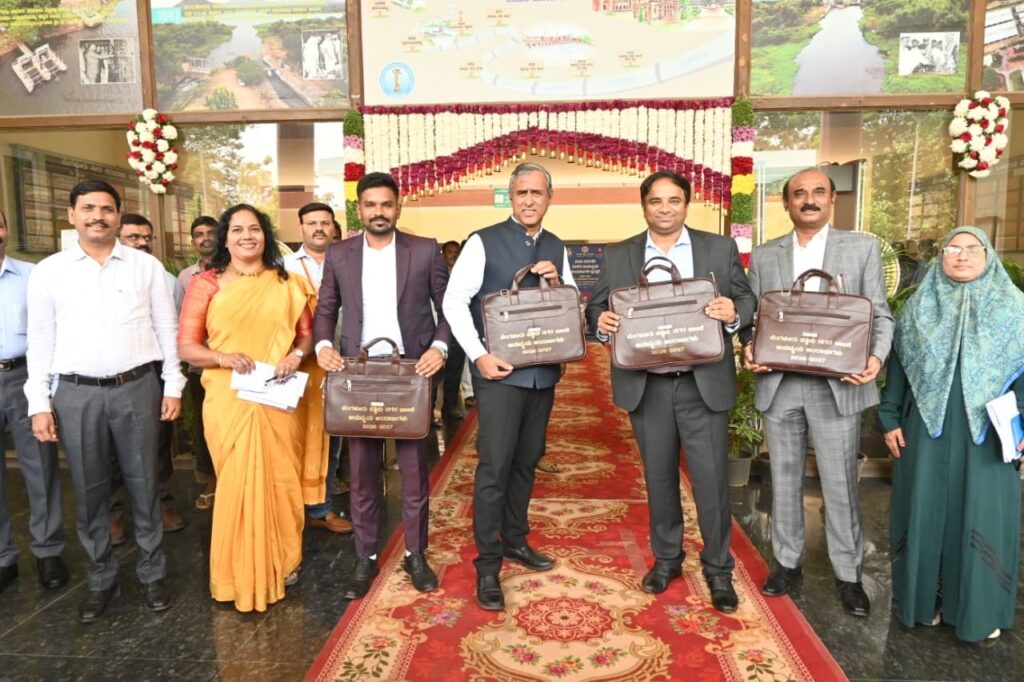
The first full-year budget of the Bengaluru West City Corporation reads less like a story of fiscal strength and more like a careful balancing act, with the civic body projecting a surplus of just ₹8.42 lakh on an outlay of over ₹4,700 crore — a margin so thin that even minor disruptions could push it into deficit.
At a headline level, the numbers appear expansive. The corporation has estimated receipts of ₹4,732.98 crore for 2026–27, almost entirely matched by expenditure of ₹4,732.73 crore, leaving behind a closing balance of only ₹25.12 lakh. But a closer look at the underlying accounts reveals a far more complex and precarious fiscal structure.
The budget’s internal arithmetic hinges on three moving parts that largely cancel each other out.
The revenue account posts a sizeable surplus of over ₹802 crore, driven by a sharp jump in tax and non-tax income. This, however, is offset by a massive deficit of more than ₹1,575 crore in the capital account, reflecting the corporation’s aggressive infrastructure push. Bridging this gap is an extraordinary account surplus of roughly ₹772 crore — composed of grants, deposits and other one-off inflows — which ultimately brings the books to near balance.
This structure underscores a key reality: the corporation’s finances are not organically self-sustaining. Instead, they rely heavily on external funding and non-recurring revenues to support an ambitious spending plan.
Property tax remains the bedrock of the city’s finances, expected to generate ₹872 crore in the coming year, alongside cesses and related levies that take total tax revenue past ₹1,000 crore. Yet, even this relatively strong base is insufficient to fund the scale of planned expenditure. To bridge the gap, the budget leans on a series of aggressive and, in some cases, untested revenue assumptions.
Among the most striking is the projection of ₹563 crore from a khata regularisation scheme — despite no corresponding revenue in the current year — and ₹200 crore from single-plot approvals.
These are supplemented by expected inflows from premium floor area ratio charges, development fees and other policy-driven instruments, signalling a shift toward monetising urban development as a key revenue strategy.
Even more consequential is the scale of dependence on government support. Grants from the State and Centre, including Finance Commission allocations and infrastructure schemes, form the backbone of the budget.
In the public works department alone, such inflows exceed ₹1,25,955 lakh, enabling a planned expenditure of ₹3,270.47 crore — by far the largest share of the budget.
This heavy tilt toward infrastructure is evident across the spending profile. Public works dominates outlays, followed by solid waste management at over ₹515 crore and administrative expenses at around ₹184 crore. In contrast, allocations for public health, education and social welfare remain comparatively modest, reflecting a familiar prioritisation of capital-intensive projects over social sectors.
The budget also signals an openness to market borrowing, with ₹200 crore expected to be raised through municipal bonds. While this aligns with broader urban financing reforms, it also introduces new fiscal risks, particularly if projected revenues fail to materialise.
Ultimately, what stands out is not the size of the budget but the narrowness of its margin for error. With a surplus of just ₹8.42 lakh and a closing balance barely above ₹25 lakh, the corporation has left itself with virtually no financial cushion. Any delay in grant disbursals, shortfall in property tax collections or underperformance of new revenue streams could quickly upset this delicate balance.