
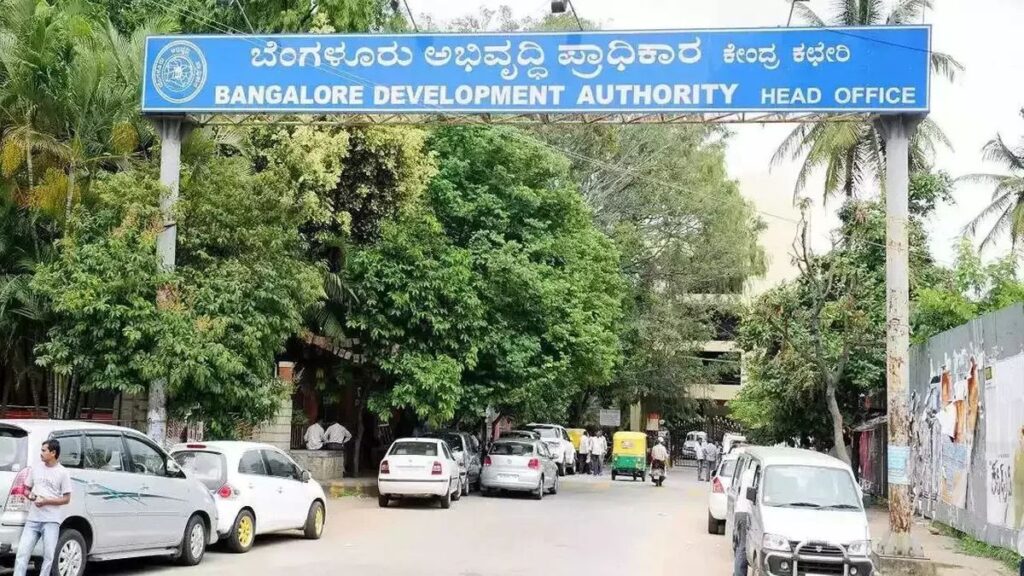
Representative Image
BDA declared promoter under RERA; Directed to register Kempegowda Layout
Bengaluru
The Karnataka Real Estate Regulatory Authority (K-RERA) has ruled that the Bengaluru Development Authority (BDA) qualifies as a “promoter” under the Real Estate (Regulation & Development) Act, 2016, and directed the authority to complete RERA registration of the Nadaprabhu Kempegowda Layout (NPKL) within two weeks.
The order, delivered by a full bench headed by Chairman Rakesh Singh, comes after a series of complaints from allottees alleging irregularities in site allotments and incomplete development works.
The batch of complaints, filed by Ramachandra Nayak and others, claimed that BDA had collected payments from allottees for plots in NPKL without providing the promised infrastructure, amenities, or timely development.
The complainants further alleged that BDA invited applications for an additional 5,000 sites despite pending RERA registration, collected amounts beyond statutory limits, and failed to deposit project funds in an escrow account as required by law.
During proceedings, BDA contended that it was a statutory authority established under the BDA Act, 1976, tasked with urban planning and public welfare, and therefore, not subject to RERA regulations. The authority argued that the formation of layouts was a welfare activity, not a commercial real estate venture, and claimed that statutory rules governed allotments rather than RERA provisions. BDA also cited complications in land acquisition and the multi-dimensional use of collected funds as reasons why RERA compliance would be impractical.
Rejecting these arguments, K-RERA clarified that under Section 2(zk) and 2(zn) of RERA, any development authority that develops land into plots for sale to the public is deemed a promoter, and such projects are classified as real estate projects. The bench emphasised that the purpose—profit or welfare—does not exempt public authorities from RERA. Supreme Court precedents, including Lucknow Development Authority v. M.K. Gupta (1994), were cited to affirm that statutory development authorities are subject to consumer protection laws when engaging in commercial sale of land or housing.
K-RERA observed that BDA itself had filed an application for RERA registration for NPKL, acknowledging the applicability of the Act, but failed to complete the registration process. The bench held that RERA has an overriding effect under Section 89, and the BDA Act cannot exempt the authority from RERA’s regulatory requirements concerning development and sale to allottees.
As part of the order, BDA has been directed to submit all requisite project details, including layout approvals, sanctioned plans, development status, financial disclosures, internal and external development works, and inventories of sold and unsold plots, within two weeks. The authority has also been instructed to halt marketing, booking, or sale of any plots, villas, or amenity spaces in the NPKL layout until registration is completed.
Furthermore, BDA has been given three weeks to submit an explanation as to why penalty proceedings under Section 59(1) of RERA should not be initiated for non-compliance with Section 3 of the Act. No costs were imposed as part of the ruling.
The K-RERA judgment reinforces the regulatory framework ensuring transparency and accountability, even for government development authorities. It underscores that allottees purchasing plots from public authorities are entitled to the same protections under RERA as those dealing with private developers.
The NPKL project, launched in 2015 with preliminary allotments in 2016, had faced criticism from residents and complainants for delays in development of basic infrastructure including water supply, sewerage, electricity, roads, and parks. The K-RERA order is expected to expedite completion of the layout and safeguard the interests of hundreds of allottees awaiting possession of their plots.
This landmark decision sets a precedent confirming that public development authorities undertaking commercial transactions are fully accountable under RERA, ensuring stricter compliance, transparency in fund utilisation, and timely delivery of promised infrastructure to homebuyers