
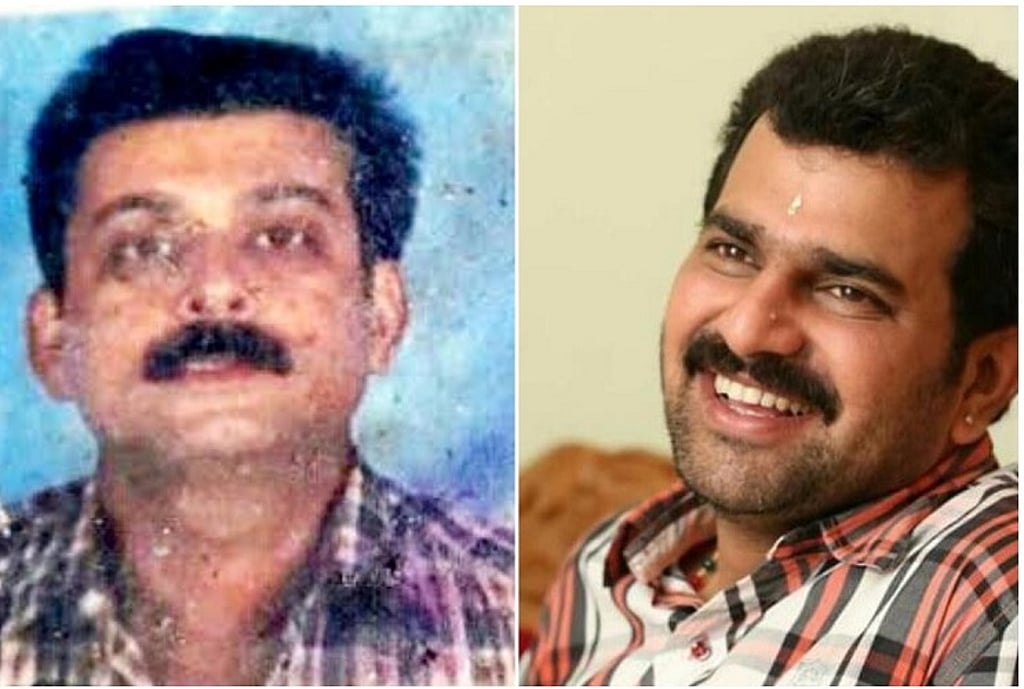
Re-audit of temple finances never resumed after Baliga’s murder
Mangaluru
Serious questions are being raised over the conduct of the Venkataramana Temple committee, as the re-audit of the shrine’s finances sought by activist Vinayak Baliga was never resumed after his murder, despite a court order paving the way for the exercise.
Baliga, who had raised allegations of financial irregularities in the temple’s administration, had secured an order for a re-audit of the temple accounts. He was relentlessly pursuing the matter and had sought scrutiny of the temple’s financial transactions. Among those associated with the temple committee at the time were Naresh Shenoy and Srimad Samyamendra Thirtha Swamiji, the seer in charge of the Kashi Mutt. Shenoy is the prime accused in the murder of Baliga.
According to court documents accessed by blrpost.com, the court had fixed March 15, 2016, for taking forward the re-audit proceedings, with the audit exercise scheduled to be carried out in April 2016. However, Baliga was brutally murdered outside his residence on March 21, 2016, bringing his campaign for greater financial scrutiny of the temple to an abrupt end.
The court records also indicate that Baliga’s persistent efforts to have the temple accounts re-audited have emerged as a significant aspect of the prosecution’s case concerning the possible motive behind his murder. The circumstances raise questions over whether his demand for a fresh scrutiny of the temple finances had become a source of concern for individuals who could potentially have faced scrutiny if the audit had proceeded.
The issue assumes greater significance in light of another allegation concerning the handling of temple offerings. During the Venkataramana Temple car festival in February 2016, Naresh Shenoy allegedly took the entire Ratha Kanike collection in an Innova car to his residence.
Baliga had reportedly objected strongly to the manner in which the temple offerings were being handled. He had insisted that the collections be first deposited in the temple’s bank account and that any amount intended to be given to the seer should subsequently be transferred through a cheque, thereby ensuring a documented financial trail.
Baliga’s insistence on transparency over the temple’s finances became one of the issues he pursued before his death. His murder, which shocked the Gowda Saraswata Brahmin (GSB) community, was particularly disturbing as the community has traditionally been associated with peaceful coexistence and social harmony. The killing sent shockwaves through the community and remains one of the most contentious criminal cases involving its members.
However, despite Baliga’s efforts and the court proceedings initiated during his lifetime, the proposed re-audit of the temple accounts was not taken forward after his death. The exercise, which could have provided clarity on the allegations surrounding the temple’s finances, has remained incomplete.
The failure to resume the audit also raises questions about what happened to the proceedings initiated at Baliga’s instance and why those who subsequently remained associated with the matter did not pursue the exercise to its logical conclusion.
More significantly, the other applicants in Miscellaneous Case No. 28/2015 — Ganesh Baliga and Ananth Kamath — also did not appear to insist on the continuation of the re-audit proceedings after Baliga’s death. This has raised questions over whether there was a lack of interest among those who could have pursued the matter or whether there were other considerations behind the decision not to press for the audit.
The circumstances have consequently fuelled questions about the conduct of the temple committee and the subsequent handling of Baliga’s demand for financial scrutiny. While the allegations of financial irregularities and the circumstances surrounding the murder are matters for the court to determine, the fact remains that the re-audit sought by Baliga never took place.
For Baliga, the issue was reportedly not merely an accounting exercise but a question of accountability over the management of temple funds. His death left that effort unfinished, while the financial questions he had raised continue to remain unanswered.
The failure to complete the re-audit after his murder therefore adds another unresolved dimension to the Baliga case and raises the larger question: why was an audit that Baliga fought for in court never carried out after his death?