
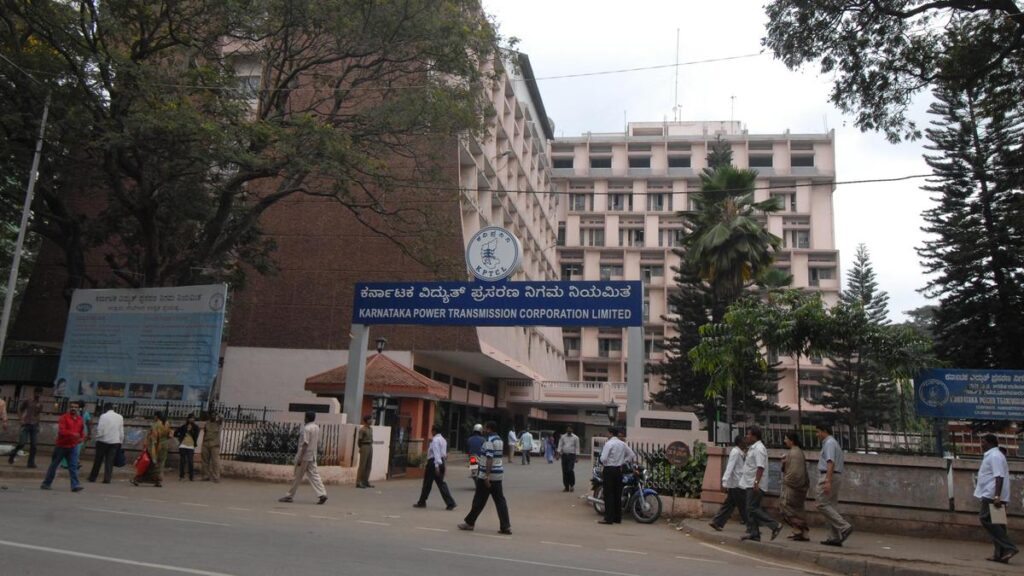
Representative Image. Credit: The Hindu
Contractors raise questions over alleged splitting of KPTCL’s ₹36-crore vehicle tender
Bengaluru
Allegations have emerged over the tendering process adopted by the Karnataka Power Transmission Corporation Limited (KPTCL) for hiring 662 vehicles at an estimated cost of ₹36 crore, with KPTCL contractors yet again questioning whether the procurement was deliberately split into multiple tenders to avoid higher-level financial approvals.
The contractors have raised concerns over the alleged division of what they claim was a single, consolidated requirement into several separate tenders. They have sought clarification on whether the total procurement value was considered while obtaining administrative and financial approvals or whether individual tender values were taken into account.
Citing a Comptroller and Auditor General (CAG) report concerning a Karnataka public sector undertaking, the contractors have pointed out a previous instance in which 22 contracts, collectively valued at ₹37.50 crore, were issued separately for similar works, allegedly keeping individual contract values within the approval limits of officials. The CAG had objected to the splitting of contracts to circumvent delegated financial powers.
However, the cited CAG observation does not directly concern KPTCL’s vehicle tenders. The contractors argue that the precedent raises questions about whether similar principles should be examined in the present case.
They have also referred to a Karnataka Government circular dated October 25, 2002, which reportedly cautions against splitting contracts in ways that could undermine competition and transparency. The applicability and current validity of the circular, however, would need to be established through official records.
Questions over tender division
According to the contractors, several aspects of the procurement process require scrutiny:
Whether the requirement for all 662 vehicles was originally planned as a single procurement.
- Whether multiple tenders were issued to keep individual contract values within the financial approval limits of particular authorities.
- Whether adequate administrative or technical justification was recorded for issuing separate tenders.
- Whether the competent authority granted administrative approval and financial sanction based on the total estimated procurement value.
- Whether the tender division affected transparency or fair competition.
The contractors maintain that if the procurement was deliberately divided to avoid the applicable approval mechanism, it could raise questions regarding compliance with financial and procurement rules.
However, issuing separate tenders for different divisions or operational requirements does not, by itself, establish any illegality. KPTCL may have administrative or technical reasons for adopting a division-wise tendering process.
Contractors seek disclosure of official records
The contractors are seeking access to key documents from KPTCL’s Corporate Office to establish the circumstances surrounding the tender process.
The documents they want include:
- The detailed calculation supporting the estimated ₹36-crore expenditure for 662 vehicles.
- Details of all division-wise and regional tenders, including tender numbers, estimated values and vehicle requirements.
- Orders authorising the issuance of separate tenders.
- Administrative Approval and Financial Sanction documents.
- KPTCL’s applicable Delegation of Powers orders.
- Appointment orders identifying the Tender Inviting Authority and Tender Accepting Authority.
- Internal file notings, justifications and approvals relating to the alleged division of tenders.
They are also seeking disclosure of rate-fixation calculations, relevant file records, approval documents and any available legal opinions, subject to applicable rules.
Legal action being considered
The contractors are considering submitting a detailed written objection to KPTCL, seeking a legal review of the procurement process and corrective action if violations of applicable tender rules, contractual conditions or statutory requirements are established.
They are also considering seeking interim relief from KPTCL if the impugned order is likely to cause serious prejudice to the contractual rights of existing vehicle service providers.
If the issue remains unresolved, they may explore appropriate legal remedies, including filing a writ petition before the Karnataka High Court, based on the advice of legal counsel and examination of the relevant documents.
Legal experts would need to examine whether the alleged tender division violated applicable financial delegation rules, procurement procedures or principles of transparency and fair competition. Merely filing an objection would not automatically entitle the contractors to a stay order. Specific legal grounds and evidence of potential harm would be necessary.
Contractors demand clarity on 2026 order
The contractors are also seeking clarity on the objective of their proposed legal challenge: whether it should seek cancellation of KPTCL’s 2026 order in its entirety or specifically challenge the application of the revised rates to contractors already providing vehicle services.
They maintain that the original procurement records, financial approvals and tender-related file notings must be examined before the legality of the process can be conclusively determined.
The controversy now centres on a key question: Was the requirement for 662 vehicles, involving an estimated expenditure of ₹36 crore, divided into multiple tenders for genuine administrative and operational reasons, or was the division intended to avoid higher-level financial approvals?
The answer, contractors say, should emerge from the official records and a transparent examination of the tendering process.