
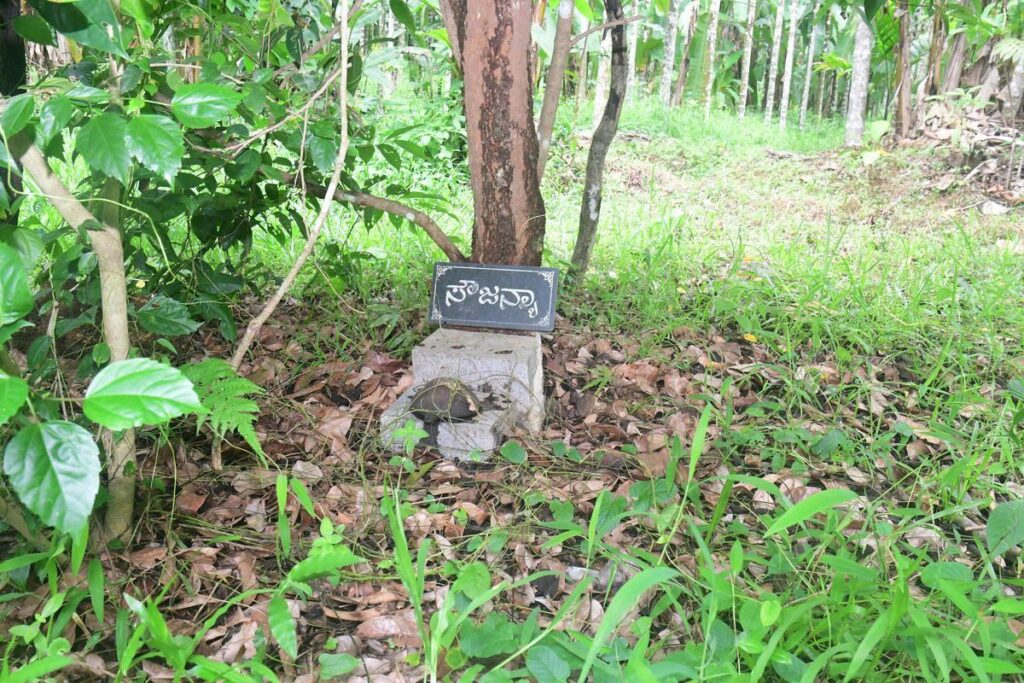
Sowjanya, minor girl from Dharmasthala was killed while she was returning from college. Photo Credit: The Hindu
Supreme Court agrees to reinvestigate Dharmasthala Sowjanya case; Pulls up CBI
New Delhi
In a significant development in the long-running quest for justice in the 2012 Dharmasthala Sowjanya rape and murder case, the Supreme Court has agreed to order a reinvestigation into the sensational crime. While the Bench has orally indicated that the matter warrants a fresh probe, the detailed written order spelling out the scope and modalities of the investigation is still awaited.
A Division Bench comprising Justices Sanjay Kumar and Sanjeev Sachdeva expressed serious dissatisfaction with the manner in which the investigation was carried out by the Central Bureau of Investigation (CBI). During the hearing, the Bench came down heavily on the agency over what it described as glaring deficiencies in the investigation and even questioned its intent, asking, “Whom are you trying to protect?”
The sharp observations came while the court examined the manner in which the investigation had progressed over the past several years. The judges noted that it was deeply disturbing to find on record that the CBI’s investigating officer had admitted that he had never visited the actual crime scene where the body of the 17-year-old girl was recovered in October 2012. The Bench remarked that such an omission struck at the very foundation of a fair criminal investigation.
The Supreme Court also indicated that the CBI would not be entrusted with the fresh investigation. While the court is yet to decide which agency will conduct the reinvestigation and under what framework, the petitioner—Sowjanya’s mother, Kusumavati—has submitted before the court the names of certain Karnataka Police officers whom she believes could conduct an impartial probe.
Sources close to the petitioner told Blrpost.com that the family would have no objection if the Special Investigation Team (SIT), currently probing the alleged mass burial case linked to Dharmasthala, is assigned the task of conducting the reinvestigation. According to the sources, the family believes that an independent state-level investigation would inspire greater public confidence than another CBI probe.
The case pertains to the brutal rape and murder of Sowjanya, a second-year Pre-University student of SDM College. On October 9, 2012, she reportedly got off her regular bus near Dharmasthala but never returned home. The following morning, her half-naked body was discovered in a wooded area barely 25 metres from the main road. The post-mortem reportedly revealed evidence of brutal sexual assault and strangulation, triggering widespread outrage across Karnataka.
The investigation initially began with the local police before being transferred to the Criminal Investigation Department (CID) following mounting public pressure. Subsequently, the case was handed over to the CBI amid persistent allegations that influential persons were being shielded.
The investigating agencies arrested Santhosh Rao of Karkala, who allegedly confessed to committing the crime. However, Sowjanya’s family, several activists and members of the public consistently maintained that Rao had been made a scapegoat while the actual perpetrators remained untouched because of their alleged political and social influence. Despite the change in investigating agencies, both the CID and the CBI ultimately filed chargesheets against Rao.
The trial, however, exposed significant weaknesses in the prosecution’s case. The special court acquitted Rao of all charges after holding that the prosecution had failed to establish guilt beyond reasonable doubt.
The court pointed to a complete lack of conclusive scientific and forensic evidence, besides highlighting several serious lapses during the investigation. One of the principal reasons for the acquittal was the absence of reliable DNA evidence linking the accused to the crime, with the court observing that the biological samples collected from the crime scene were inadequate and insufficient for establishing guilt.
Why may the Supreme Court have agreed to a reinvestigation?
One of the factors that appears to have influenced the Supreme Court is the Karnataka government’s stand regarding advances in forensic science. In its response to the Special Leave Petition (SLP), the State submitted that recent developments in DNA technology have substantially improved the possibility of extracting usable genetic material even from old and degraded samples.
The State informed the court that the mere passage of nearly 15 years does not, by itself, eliminate the possibility of obtaining sperm-based DNA evidence. While acknowledging that soil contamination and fungal growth on biological samples present genuine forensic challenges, the State argued that modern forensic science has evolved considerably.
According to the government’s submission, advanced inhibitor-resistant DNA extraction techniques and cutting-edge technologies developed over the past decade are now capable of analysing degraded and contaminated biological samples far more effectively than was possible five or ten years ago. The State contended that these technological advancements could potentially yield fresh forensic evidence, making a reinvestigation both feasible and meaningful despite the age of the case.
The Supreme Court is expected to issue a detailed order outlining the investigating agency, the scope of the reinvestigation and the safeguards to be followed during the fresh probe.